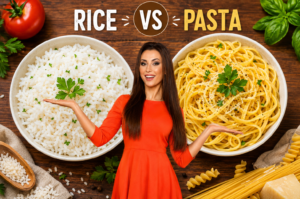
Dinner time comes around, and many people ask the same question: rice vs pasta — which one should you choose?
Both foods are everywhere. Rice appears in Asian dishes, Latin meals, and family dinners around the world. Pasta is a favorite in Italian cooking and has become a comfort food for millions of people.
But the debate is not only about taste.
People want to know about energy, nutrition, weight goals, and how these foods affect the body. That is where things get interesting.
Here’s the thing. Neither rice nor pasta is automatically “good” or “bad.” The better choice depends on your needs, how you prepare it, and what you eat with it.
In my experience, people often make this comparison too simple. They look at one number on a nutrition label and ignore the full meal.
Let’s break it down.
Rice vs Pasta Nutrition: Understanding the Real Difference
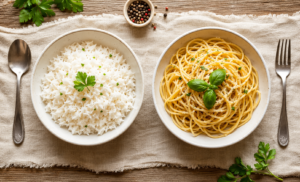
When people compare rice vs pasta nutrition, they usually focus on calories and carbs. However, nutrition includes much more than that.
Both foods mainly provide carbohydrates. Carbs give your body energy, especially during daily activities and exercise.
Rice comes from grains, while pasta is usually made from wheat flour and water.
The type matters.
For example:
- White rice is more processed than brown rice
- Regular pasta differs from whole wheat pasta
- Cooking methods change the final meal
A simple bowl of rice with vegetables is very different from a large plate of pasta covered in a heavy sauce.
Think of it this way.
The food around the carb often changes the result.
Rice vs Pasta Carbs: Which Has More?
The question about rice vs pasta carbs comes up often.
Both foods are carbohydrate-rich.
A typical cooked serving:
| Food | Approximate Carbs |
|---|---|
| White rice (1 cup cooked) | Around 45g carbs |
| Pasta (1 cup cooked) | Around 40g–45g carbs |
The difference is usually small.
However, portion size changes everything.
Many people eat more pasta because it feels lighter on the plate. Rice can feel more filling because it absorbs water during cooking.
On the other hand, pasta often contains more protein because wheat naturally has more protein than rice.
Expert Insight
I have seen people blame one food for their results when the real issue is usually portion size. A balanced meal matters more than choosing one carb over another.
Rice vs Pasta Calories: Which One Is Lower?
When discussing rice vs pasta calories, many people expect one clear winner.
The reality is closer.
A cooked cup of each is usually in a similar calorie range.
| Food | Calories (Approx.) |
|---|---|
| White rice (1 cup cooked) | 200 calories |
| Pasta (1 cup cooked) | 200 calories |
So why do people feel different after eating them?
Because texture and meal combinations matter.
Pasta dishes often include:
- Cheese
- Cream sauces
- Oils
- Large portions
Rice dishes often include:
- Vegetables
- Beans
- Lean proteins
- Spices
Of course, this depends on the recipe.
The ingredient list around the food can completely change the meal.
The Good, The Bad, & The Ugly of Rice vs Pasta
Every option has strengths.
And weaknesses.
The Good: Rice
Rice is naturally gluten-free, which makes it useful for people avoiding gluten.
It also works with many cuisines.
Examples:
- Stir-fry meals
- Curry dishes
- Rice bowls
- Traditional family recipes
Rice is simple.
That matters.
The Good: Pasta
Pasta is easy to prepare and offers many shapes and styles.
It can also provide more protein than white rice.
Whole wheat pasta adds more fiber compared to regular pasta.
The Bad
Rice can be low in fiber when choosing white varieties.
Pasta can become calorie-heavy depending on sauces and toppings.
The Ugly
I’ve seen people mess this up by turning the rice vs pasta discussion into a food battle.
Food is not that simple.
A huge portion of either option can create problems. A reasonable portion can fit into many eating patterns.
Rice vs Pasta Glycemic Index: How They Affect Blood Sugar
The topic of rice vs pasta glycemic index is important for people who pay attention to blood sugar response.
The glycemic index (GI) measures how quickly carbohydrate foods can raise blood sugar.
Generally:
- White rice can have a higher GI depending on the type
- Pasta often has a lower GI because its structure slows digestion
However, many factors change this.
Cooking time matters.
A softer cooked pasta may digest differently than firm pasta.
The type of rice matters too.
For example, some rice varieties affect blood sugar differently than others.
According to Harvard’s nutrition resources, food quality and overall eating patterns matter more than focusing on one single food:
https://nutritionsource.hsph.harvard.edu
Pro-Tip
If you enjoy rice or pasta, focus on building the whole plate. Adding vegetables and protein can change how satisfying your meal feels.
White Rice vs Pasta: Which Is Better?
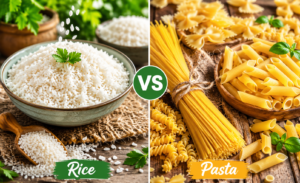
The comparison of white rice vs pasta is common because both are everyday foods.
White rice:
Pros
- Easy to digest
- Gluten-free
- Works with many meals
Cons
- Lower fiber
- Less protein compared to pasta
Pasta:
Pros
- Slightly higher protein
- Many varieties available
- Often keeps texture well
Cons
- Usually contains gluten
- Sauces can add many extra calories
There is no universal winner.
It depends on the person.
Technical Breakdown: How Cooking Changes Rice and Pasta
Cooking affects food more than many people realize.
Rice absorbs water while cooking.
Pasta also changes as starch interacts with water.
This affects:
- Texture
- Fullness
- Digestion speed
Here is a simple comparison:
| Feature | Rice | Pasta |
|---|---|---|
| Main Ingredient | Rice grain | Wheat flour |
| Gluten | No | Usually yes |
| Protein | Lower | Slightly higher |
| Variety | Many rice types | Many pasta shapes |
| Cooking Style | Absorbs flavors | Holds sauces |
For more information about grains and healthy eating patterns, you can also check USDA nutrition guidance:
https://www.myplate.gov
Who Is Rice vs Pasta For?
The answer depends on lifestyle.
Rice May Be Better For:
- People avoiding gluten
- Those who enjoy Asian-style meals
- People who prefer simple ingredients
Pasta May Be Better For:
- People who enjoy Italian-style meals
- Those wanting more variety
- People who prefer firmer textures
However, both can fit into a balanced diet.
Expert Insight
The best food choice is usually the one you can enjoy consistently. A meal plan that feels impossible will not last.
Carbs in Rice vs Pasta: The Final Comparison
Looking at carbs in rice vs pasta, the difference is smaller than many people expect.
Both provide energy.
Both can be part of healthy meals.
The better choice depends on:
- Portion size
- Cooking method
- Personal goals
- Other foods in the meal
If you love rice, you do not need to avoid it.
If you enjoy pasta, you do not need to remove it.
Balance wins.
Final Verdict: Rice or Pasta?
After comparing rice vs pasta, the answer is clear:
There is no single champion.
Rice offers simplicity and works well for many diets. Pasta provides variety and can be a satisfying meal base.
The smartest choice is not asking, “Which food is perfect?”
The better question is:
How can you build a meal where the food you enjoy also supports the way you want to feel?