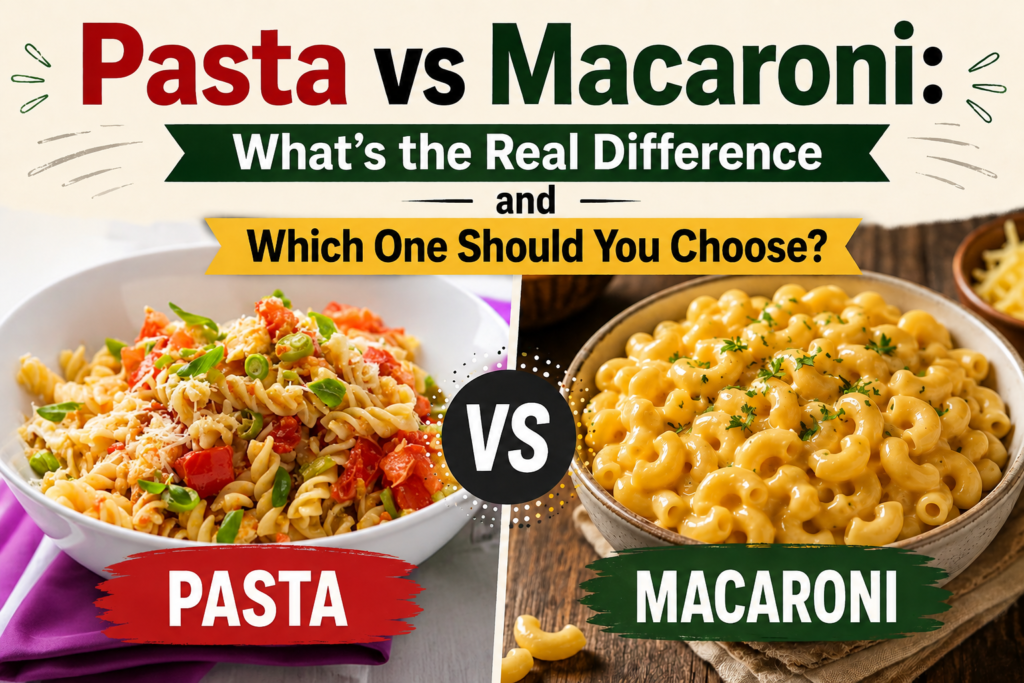
You’ve probably stood in a grocery aisle holding a package of noodles and wondered: is this basically spaghetti? They can look almost identical at first glance. Long strands. Similar shape. Both go into boiling water. Both can turn into a quick, filling meal.
But noodle vs spaghetti is not really a battle between two identical foods.
The difference starts with what they are made from and how they are produced. Then it gets more interesting. Their texture, cooking style, sauces, and the dishes they belong to can be quite different.
And here’s the thing: calling every long strand “spaghetti” is one of those small food mistakes that can make a recipe feel completely wrong.
Noodle vs Spaghetti: The Basic Difference
Let’s keep it simple.
Spaghetti is a type of pasta. It is traditionally made from durum wheat semolina and water, then formed into long, solid, cylindrical strands. USDA specifications describe spaghetti as a “long form” pasta with a solid cylindrical shape.
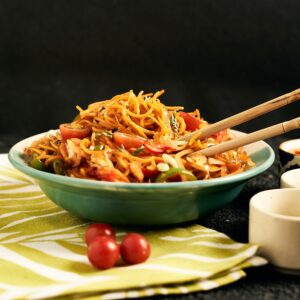
Noodles are a much broader food category.
Depending on the style, noodles may be made from wheat flour, rice, buckwheat, mung beans, or other ingredients.
That changes the eating experience.
Think of it this way: spaghetti is one specific member of the pasta family, while “noodle” can describe many different foods.
So when someone asks, “Are noodles and spaghetti the same?” the honest answer is no—not always.
What Makes Spaghetti Spaghetti?
Traditional spaghetti has a few features that make it easy to recognize:
- Long, thin strands
- Solid, round shape
- Usually made with durum wheat
- Firm texture when cooked properly
- Commonly paired with Italian-style sauces
It also has a strong relationship with Italian cooking.
A simple tomato sauce works beautifully. So does olive oil, garlic, cheese, or a meat-based sauce. The strands give the sauce plenty of surface area to cling to without becoming too heavy.
Pro-Tip: Don’t judge spaghetti by its appearance alone. Thickness matters. Thin spaghetti, regular spaghetti, and thicker long pasta can behave differently in the same sauce.
Noodle vs Spaghetti: How They Are Made
This is where the comparison gets more technical.
But don’t worry. It’s not complicated.
Many traditional wheat noodles begin as dough that gets rolled or sheeted, then cut into strands. USDA research describes this as a key distinction between many noodles and pasta: noodles are often processed through sheeting, while pasta is commonly shaped through extrusion.
Spaghetti, on the other hand, is commonly produced by pushing pasta dough through a die. The dough comes out in the desired shape and is then dried.
The ingredients can also differ.
For example, some Asian-style wheat noodles may contain salt or alkaline ingredients. Egg noodles, as the name suggests, contain egg. Rice noodles use rice-based ingredients rather than the wheat-based dough used for traditional spaghetti.
That means texture isn’t just about cooking time.
The ingredients and production method matter too.
A good wheat noodle might feel springy and chewy. A rice noodle can feel softer and more delicate. Properly cooked spaghetti usually has a firm bite that Italians describe as al dente.
Same general idea: long strands.
Very different results.
The Good, The Bad, & The Ugly
Let’s be honest.
Neither noodles nor spaghetti automatically wins.
The Good: Spaghetti
Spaghetti is easy to pair with familiar sauces. It also has a predictable texture when you buy a good-quality product and cook it correctly.
Best spaghetti uses:
- Tomato-based sauces
- Meat sauces
- Garlic and olive oil dishes
- Simple cheese-based recipes
- Baked pasta meals
A strong spaghetti dish doesn’t need a complicated recipe.
That’s part of its charm.
The Bad: Spaghetti
Spaghetti has limits.
Its round shape isn’t ideal for every sauce. A very thin or watery sauce may slide off more easily than a thicker sauce. And if you overcook it, the strands can become soft and lose the firm bite that makes spaghetti enjoyable.
I’ve seen people mess this up by treating cooking time as a suggestion.
It isn’t.
Watch the pasta.
The Good: Noodles
Noodles give you far more variety.
You can choose wheat noodles, egg noodles, rice noodles, buckwheat noodles, and many others. Each brings its own texture and works with different recipes.
Best noodle uses:
- Stir-fries
- Soups
- Broths
- Cold noodle dishes
- Asian-inspired meals
Noodles can also absorb flavors very differently depending on their ingredients and shape.
The Ugly: Noodles
The word “noodle” can be too vague.
If a recipe simply says “use noodles,” you may still have a lot of choices to make. Rice noodles won’t behave like egg noodles. Thick wheat noodles won’t cook like thin ones.
So don’t assume one noodle can replace another.
Expert Insight: When replacing noodles in a recipe, match the thickness and texture before worrying about the exact brand. That usually gets you closer to the intended result.
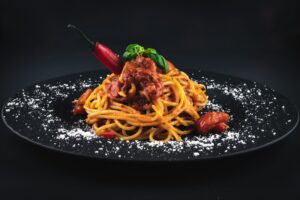
Noodle vs Spaghetti Comparison
| Feature | Noodles | Spaghetti |
|---|---|---|
| Category | Broad food category | Specific pasta type |
| Main ingredients | Varies by style | Traditionally durum wheat and water |
| Shape | Many shapes | Long, round strands |
| Texture | Varies widely | Usually firm and chewy when properly cooked |
| Common dishes | Soups, stir-fries, noodle bowls | Pasta with sauces |
| Cooking style | Depends on noodle type | Usually boiled until desired texture |
| Sauce pairing | Depends on noodle | Excellent with many Italian-style sauces |
| Variety | Very high | More specific |
The biggest takeaway is sitting right there.
Noodles are a category. Spaghetti is a specific type of pasta.
Best Noodle vs Bad Noodle: What Should You Look For?
Not every noodle deserves a place in your bowl.
A good noodle should suit the recipe. That’s more important than simply buying the most expensive package.
Look for:
Good noodles
- Hold their shape after cooking
- Match the dish’s sauce or broth
- Have a pleasant texture
- Don’t turn mushy too quickly
Poor noodles
- Fall apart during cooking
- Become overly soft
- Don’t match the recipe
- Have a texture you don’t enjoy
“Bad” doesn’t always mean unsafe or low quality. Sometimes the noodle is simply wrong for the dish.
Thin rice noodles in a heavy stir-fry? Maybe not the best choice.
Thick wheat noodles in a delicate broth? Again, probably not ideal.
The recipe decides.
Best Spaghetti vs Bad Spaghetti
The same rule applies to spaghetti.
A good spaghetti should cook evenly and maintain some firmness. It should also work with the sauce rather than disappearing underneath it.
Good spaghetti:
- Keeps its shape
- Has a firm bite
- Cooks evenly
- Holds sauce well
Poor spaghetti:
- Turns mushy
- Breaks too easily
- Cooks unevenly
- Loses texture quickly
And remember: even good spaghetti can become bad spaghetti if you overcook it.
That part is on the cook.
Who Is Noodles Best For?
Noodles make sense if you enjoy variety.
They’re especially useful for people who like soups, stir-fries, noodle bowls, or experimenting with different cuisines.
If you like changing things up, noodles give you plenty of room to experiment.
You can also choose based on the dish rather than forcing one type into every recipe.
Want something light?
A thin noodle may work.
Want something chewy?
Try a thicker wheat noodle.
Want something different from wheat?
Rice or buckwheat noodles may be worth exploring.
Who Is Spaghetti Best For?
Spaghetti is the easier choice when you’re craving classic pasta.
It’s familiar. It’s widely available. And there are countless recipes built around it.
If you’re making a simple tomato sauce for dinner, spaghetti is an obvious choice.
If you’re cooking a traditional-style Italian pasta meal, it makes even more sense.
For beginners, spaghetti is also a comfortable starting point because you don’t need special equipment or unusual ingredients.
Pro-Tip: The sauce should influence your pasta choice. Don’t start with “Which pasta do I have?” Start with “What kind of sauce am I making?” Then choose the shape that works with it.
Can You Substitute Noodles for Spaghetti?
Sometimes.
But don’t expect an identical result.
If you’re making a stir-fry, noodles are usually the better fit. If you’re making classic spaghetti with tomato sauce, traditional spaghetti will usually give you the expected texture and appearance.
Could you use another long noodle?
Sure.
Will it taste exactly the same?
Probably not.
That’s the fun part of cooking, though. Substitutions can work when you understand what you’re changing.
For more detailed food information, the USDA food and nutrition resources are a useful starting point. USDA data also treats spaghetti and noodles as related but distinct food categories.
Noodle vs Spaghetti: Final Verdict
So, noodle vs spaghetti isn’t really about deciding which food is better.
It’s about choosing the right food for the job.
Choose spaghetti when you want a classic pasta meal with a firm, satisfying bite and a sauce that works well with long strands.
Choose noodles when you want more flexibility, especially for soups, stir-fries, and dishes from different culinary traditions.
In my experience, the biggest mistake is trying to make one replace the other in every situation.
And they definitely don’t belong in the same recipes every time.
So next time you’re standing in front of the pasta aisle, ask yourself one simple question:
Are you choosing the strand because it looks familiar—or because it actually fits the dish you’re about to make?