That’s exactly why orzo salad deserves a spot in your recipe rotation. Orzo is small enough to mix with almost every bite, while fresh vegetables, herbs, lemon, and a good dressing keep the whole dish bright.
It works for lunch. It works beside grilled food. It even holds up well in the fridge for the next day. And if you have a few random vegetables sitting around, you can probably use them here.
So, is orzo salad healthy? It can be. The answer depends heavily on what you add to it and how you build the dressing.
What Is Orzo Salad, Anyway?
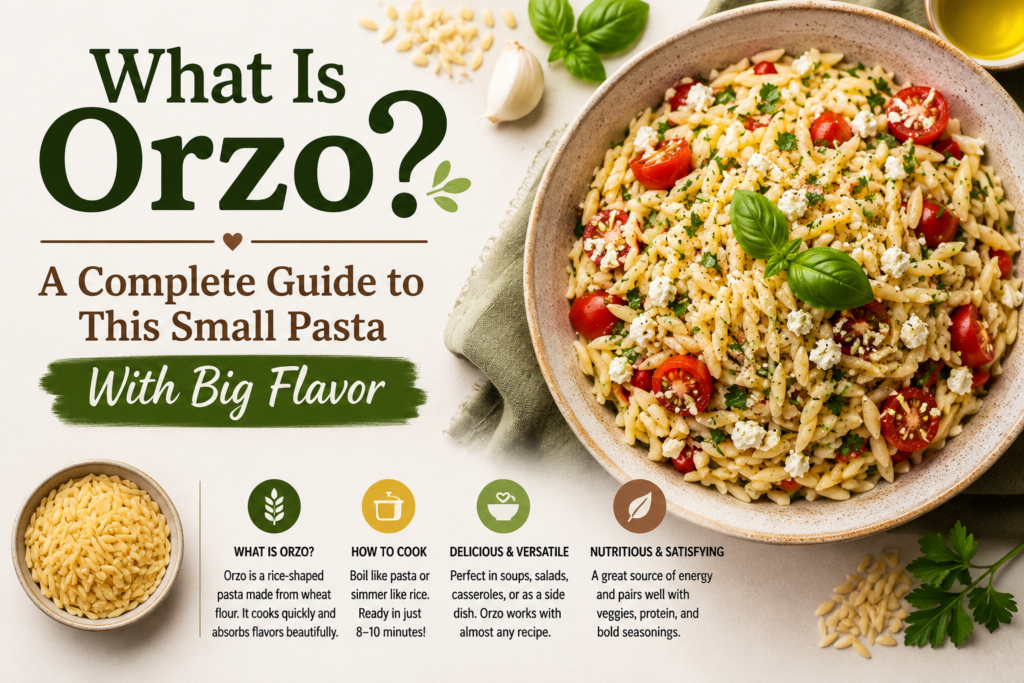
First, let’s clear up one common mistake. Orzo looks like rice, but it is actually a small type of pasta. That shape makes it especially useful for cold pasta salads because it mixes easily with chopped vegetables and dressing.
A basic Mediterranean-style version might include:
- Cooked orzo
- Cucumber
- Cherry tomatoes
- Red onion
- Feta cheese
- Olives
- Fresh herbs
- Lemon juice
- Olive oil
You don’t need every ingredient.
That’s the fun part.
In my experience, the best orzo salad is rarely the one with the longest ingredient list. It’s the one where the pasta, vegetables, and dressing actually taste balanced.
The Good, The Bad, & The Ugly
The good: Orzo cooks quickly, takes on dressing nicely, and makes a salad feel more filling than a bowl of plain vegetables.
The bad: It can become dry after sitting in the refrigerator. Orzo absorbs dressing, so a salad that tastes perfect right after mixing may need a little extra lemon juice or olive oil later.
The ugly: Overcooked orzo.
Nobody wants mushy pasta stuck together in a cold salad.
Cook it according to the package directions, then drain it well. Let it cool before adding delicate vegetables. Some recipes also dress the pasta while it is still warm so it can absorb more flavor. (Food Network)
Pro Tip: Don’t drown the salad in dressing on day one. Save a little dressing in the fridge. If the orzo absorbs too much overnight, add a spoonful before serving and toss again.
How to Make Orzo Salad Without Making It Bland
If you want to know how to make orzo salad that people actually want seconds of, start with texture.
You need contrast.
Think creamy feta against crisp cucumber. Juicy tomatoes against chewy pasta. A bright lemon dressing against salty olives.
Start by cooking the orzo. While it cooks, chop your vegetables into small pieces. The goal is simple: you should be able to get a little of everything on your fork.
Next, make a quick dressing. A good starting point is olive oil, fresh lemon juice, garlic, a little Dijon mustard, salt, and black pepper.
Then combine the cooled orzo with your vegetables and dressing. Add feta and herbs near the end so they don’t disappear into the mixture.
Give it a taste.
This step matters.
If it tastes flat, it probably needs more acid or seasoning. A squeeze of lemon can wake up the entire bowl. If it feels dry, add a small amount of olive oil.
For a recipe reference, you can also check this Mediterranean orzo salad recipe from Food Network for a traditional ingredient combination.
Easy Ways to Change the Recipe
One reason I like orzo salad is how easy it is to change.
For more protein, add chickpeas, grilled chicken, tuna, or another protein you enjoy. For extra vegetables, try bell peppers, spinach, roasted zucchini, or artichokes.
Want a sweeter flavor? Add chopped grapes or a little dried fruit.
Want more crunch? Try toasted seeds or nuts.
Just keep the balance in mind. If you add a salty ingredient such as olives and feta, you may need less added salt.
Expert Insight: I’ve seen people mess this up by adding every ingredient they have in the refrigerator. More food does not always mean better salad. Pick a few ingredients that work together, then let them shine.
Orzo Salad Benefits: Is It Actually Healthy?
Let’s be realistic.
Calling every pasta salad “healthy” just because it contains vegetables would be misleading.
The orzo salad benefits depend on the ingredients and portions. Traditional orzo is refined pasta, so it does not automatically provide the same benefits as a whole-grain food. However, adding plenty of vegetables, beans, healthy fats, and a sensible amount of cheese can make the overall meal more balanced.
Harvard’s Healthy Eating Plate recommends building meals around plenty of vegetables and fruit, choosing whole grains when possible, adding a healthy protein source, and using healthy plant oils. (The Nutrition Source)
That gives you an easy way to improve your salad.
Try these swaps:
- Choose whole-wheat orzo when available.
- Add chickpeas or beans for plant-based protein.
- Use plenty of colorful vegetables.
- Choose olive oil for the dressing.
- Keep very salty ingredients moderate.
- Add fresh herbs for flavor instead of relying only on salt.
If you are wondering is orzo salad healthy, the better question is: What is in your orzo salad?
That tells you much more.
Orzo Salad vs. Traditional Pasta Salad
They may look similar, but orzo gives you a different eating experience.
| Feature | Orzo Salad | Traditional Pasta Salad |
|---|---|---|
| Pasta shape | Small, rice-like pieces | Usually larger shapes |
| Texture | Soft with a light bite | Depends on pasta shape |
| Vegetable mixing | Very easy | Can vary |
| Dressing | Coats small pieces well | Often sits around larger pasta |
| Best use | Lunches, picnics, side dishes | Cookouts, parties, meal prep |
Neither one wins every time.
If you want something that feels lighter and mixes easily with small vegetables, I’d choose orzo. If you want a chunkier pasta salad with large pieces, another pasta shape may work better.
Who Is Orzo Salad For?
Honestly, almost anyone who likes pasta and fresh vegetables can find a version they enjoy.
It’s especially useful for people who want a meal that can be prepared ahead. You can make a bowl, refrigerate it, and adjust the dressing before serving.
It also works well for family gatherings because you can make a large batch without spending all afternoon in the kitchen.
For lunch, add chickpeas or chicken. For dinner, serve it next to grilled vegetables or fish. For a picnic, keep the dressing bright and the vegetables crisp.
And if you have picky eaters at home, you can keep the base simple and let everyone add their preferred toppings.
Pro Tip: Make the base first. Then divide it into smaller bowls and customize each one. It saves you from making several completely different salads.
Common Orzo Salad Mistakes to Avoid
A few small mistakes can change the whole dish.
Overcooking the orzo: This creates a soft, sticky salad.
Using too little dressing: Orzo keeps absorbing moisture, especially after refrigeration.
Cutting vegetables too large: Huge cucumber chunks can overpower the tiny pasta.
Adding too much cheese: Feta brings plenty of flavor, so you usually don’t need a mountain of it.
Skipping the taste test: This is probably the biggest one.
Taste the salad after mixing. Then taste it again after chilling.
The flavor can change.
If it needs something, adjust it before serving.
Final Verdict: Should You Try Orzo Salad?
Absolutely—especially if regular pasta salad feels boring to you.
A good orzo salad gives you a flexible base that works with fresh vegetables, herbs, beans, cheese, and a bright dressing. It can be simple enough for a weekday lunch but attractive enough for a family gathering.
The real trick is not stuffing the bowl with everything possible. Keep the flavors balanced. Cook the orzo properly. Use enough dressing. And taste before you serve.
If you want to make it more nutritious, build the salad around vegetables, a quality protein source, and healthier fats rather than treating the pasta as the entire meal. That approach also lines up with Harvard’s general guidance for creating balanced meals. (The Nutrition Source)
For more evidence-based food guidance, see the Harvard Healthy Eating Plate.